
Introduction
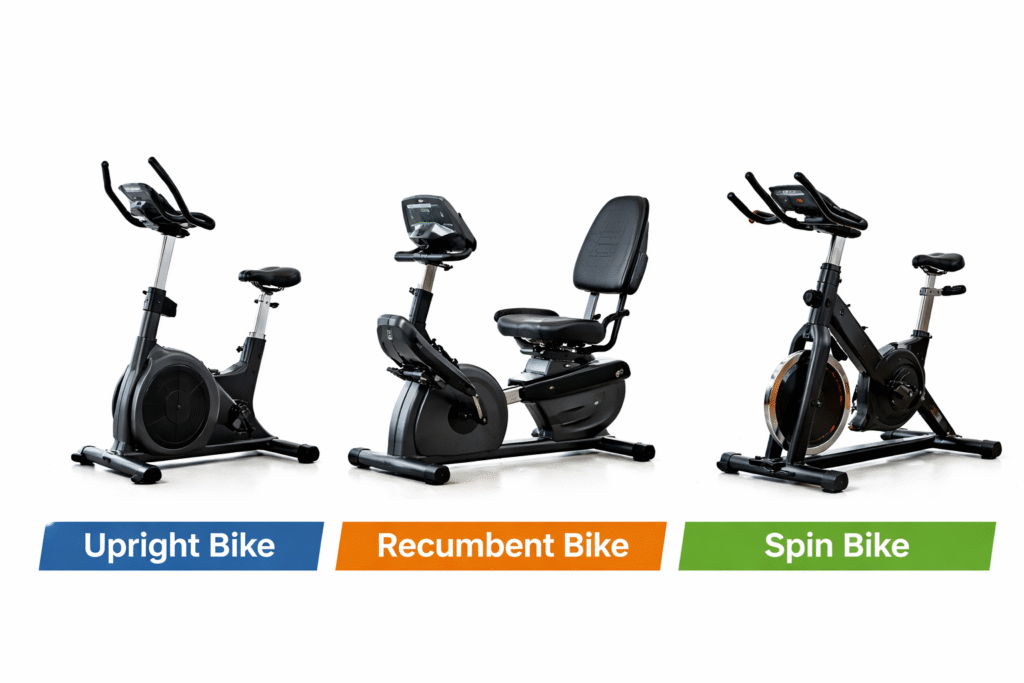
If you’re wondering what are the 3 different types of stationary bikes, you’re not alone. Stationary bikes are a popular choice for home workouts and gym routines because they provide a low-impact, effective way to improve fitness, burn calories, and strengthen muscles. Unlike traditional outdoor cycling, stationary bikes allow you to exercise regardless of weather, traffic, or time constraints.
Understanding the differences between the main types—upright, recumbent, and spin bikes—will help you choose the right bike based on your fitness goals, comfort level, and daily routine. Whether you’re looking for the best bike for casual riding and exercise, a machine for high-intensity training, or a bike suitable for commuting simulation, knowing the options available is key to making the best choice.
In this guide, we’ll explore each type in detail, explain their unique benefits, discuss resistance systems, and help you find the best type of bicycle for exercise that matches your needs.
Types of Exercise Bike Resistance
When learning what are the 3 different types of stationary bikes, it’s just as important to understand how resistance works. Resistance is what makes pedaling easier or harder, directly affecting your workout intensity. Choosing the right resistance system can help you find the best type of bicycle for exercise based on your fitness goals.
1. Magnetic Resistance
Magnetic resistance is one of the most popular and modern types of exercise bike resistance. It uses magnets placed near the flywheel to create tension without physical contact.
- Smooth and quiet operation
- Low maintenance (no friction = less wear)
- Ideal for home use
- Offers precise stationary bike resistance levels
👉 This type is perfect if you want the best bike for casual riding and exercise in a quiet environment.
2. Friction Resistance
This system is commonly found in spin bikes.
- More affordable option
- Provides a realistic road-bike feel
- Resistance can be adjusted manually
- Requires occasional maintenance (pad replacement)
👉 A good choice for users looking for the best bike for exercise and commuting simulation, especially indoor cycling enthusiasts.
3. Air Resistance
Air resistance bikes use a fan wheel that creates resistance based on how fast you pedal—the harder you pedal, the greater the resistance.
- Unlimited resistance levels
- Great for high-intensity workouts
- Slightly noisy due to airflow
👉 Best suited for advanced users who want dynamic workouts and higher calorie burn.
Understanding Stationary Bike Resistance Levels
After learning what are the 3 different types of stationary bikes, the next step is understanding how resistance levels work. Resistance levels control how easy or hard it is to pedal, helping you adjust the intensity of your workout. Knowing how to use them properly can make a big difference in your fitness results.
What Are Resistance Levels?
Stationary bike resistance levels refer to the different intensity settings available on an exercise bike. These levels are usually numbered (for example, 1–10 or 1–20), where:
- Lower levels = easier pedaling (great for warm-ups or beginners)
- Higher levels = harder pedaling (better for strength and endurance)
The way these levels feel can vary depending on the types of exercise bike resistance used, such as magnetic, friction, or air systems.
How to Use Resistance Levels Effectively
To get the most out of your workout, it’s important to adjust resistance based on your goals:
- For beginners:
This is ideal if you’re looking for the best bike for casual riding and exercise. - For weight loss:
Use medium resistance with longer sessions to burn calories steadily. - For muscle strength:
Increase resistance gradually to challenge your legs and improve endurance. - For commuting simulation:
Mix low and high resistance levels to mimic real road conditions, making it closer to the best bike for exercise and commuting.
Tips for Choosing the Right Level
- Always start with a warm-up at a low level
- Increase resistance slowly to avoid injury
- Maintain proper posture while pedaling
- Choose a level where you feel challenged but can still maintain a steady pace
Choosing the right resistance also helps you find the best type of bicycle for exercise based on your personal fitness level and comfort.
Common Problems with Exercise Bike Resistance
While understanding what are the 3 different types of stationary bikes is important, it’s equally essential to know what can go wrong with resistance systems. Over time, exercise bikes may develop resistance issues that affect workout quality. Identifying these problems early helps you maintain performance and choose the best type of bicycle for exercise without frustration.
1. Exercise Bike Resistance Not Working
One of the most common issues users face is when the resistance does not change at all, no matter how you adjust the settings.
Possible causes include:
- Loose or worn-out drive belt
- Faulty resistance motor (in magnetic bikes)
- Broken tension knob (in friction bikes)
- Disconnected or damaged wiring
Quick fixes:
- Check and tighten loose parts
- Reset the console (for digital bikes)
- Inspect the resistance mechanism for damage
This problem can occur in all types of exercise bike resistance, whether magnetic, friction, or air-based.
2. Resistance Feels Too Easy or Too Hard
Sometimes, even when resistance is working, it may not feel accurate.
Reasons may include:
- Misaligned magnets or brake pads
- Worn-out friction pads
- Calibration issues in digital systems
If your stationary bike resistance levels don’t match your effort, it becomes harder to achieve your fitness goals, especially if you’re aiming for the best bike for casual riding and exercise.
3. Noise During Resistance Adjustment
Unusual noises like squeaking or grinding can indicate resistance issues.
Common causes:
- Lack of lubrication
- Worn brake pads (in friction systems)
- Dirt or debris in the flywheel
Regular maintenance can prevent these problems and keep your bike running smoothly.
4. Brand-Specific Issues (e.g., Life Fitness Bikes)
Some users report problems like Life Fitness bike resistance not working, which are often related to:
- Software or console errors
- Sensor malfunction
- Internal wiring faults
In such cases, it’s best to consult professional support or the manufacturer.
Understanding these common resistance problems helps you make smarter decisions when choosing the best bike for exercise and commuting or home workouts. Next, we’ll explore how to choose the right stationary bike based on your personal fitness needs.
Which Stationary Bike Is Best for You?
Now that you understand what are the 3 different types of stationary bikes, the next step is choosing the one that fits your needs. The best bike for you depends on your fitness goals, comfort level, and how you plan to use it daily. Making the right choice will help you stay consistent and get better results.
1. Choose Based on Your Fitness Goals
Different bikes are designed for different purposes, so it’s important to match your goal with the right type:
- For beginners or light workouts:
An upright bike is often the best bike for casual riding and exercise. It’s simple to use and feels similar to a regular outdoor bicycle. - For comfort and longer sessions:
A recumbent bike is the best type of bicycle for exercise if you want back support and a low-impact workout. - For intense training and weight loss:
A spin bike is ideal for high-energy workouts and is often considered the best bike for exercise and commuting simulation indoors.
2. Consider Resistance Type and Levels
The types of exercise bike resistance also play a big role in your decision. Some people prefer smooth and quiet workouts, while others want a more realistic cycling feel.
- Magnetic resistance → quiet and low maintenance
- Friction resistance → more control and road-like feel
- Air resistance → dynamic and challenging
Also, check how many stationary bike resistance levels the bike offers. More levels mean better control over your workout intensity.
3. Think About Space and Budget
- Compact bikes are great for small homes
- Foldable options save space
- Higher-end bikes offer advanced features but cost more
Choose a bike that fits both your space and budget without compromising essential features.
4. Comfort and Adjustability Matter
Make sure the bike offers:
- Adjustable seat and handlebars
- Proper cushioning
- Easy-to-use controls
Comfort is key if you plan to exercise regularly.
Conclusion
Understanding what are the 3 different types of stationary bikes is the first step toward choosing the right fitness equipment for your needs. Upright, recumbent, and spin bikes each offer unique benefits, making them suitable for different users—from beginners to advanced athletes. By knowing how each type works, you can confidently select the option that aligns with your goals and lifestyle.
Along with bike type, factors like types of exercise bike resistance and stationary bike resistance levels play an important role in your overall experience. Whether you want the best bike for casual riding and exercise, a comfortable option for long sessions, or the best bike for exercise and commuting simulation, there is a perfect match available for you.
In the end, the best choice depends on your comfort, fitness level, and how consistently you plan to use the bike. Take time to evaluate your needs, and you’ll find the best type of bicycle for exercise that helps you stay active, healthy, and motivated.
Now that you have a complete understanding, you’re ready to choose the ideal stationary bike and start your fitness journey with confidence. 🚴♂️
FAQs
What are the 3 different types of stationary bikes?
The three main types are upright bikes, recumbent bikes, and spin bikes. Each type is designed for different fitness levels and goals, making it easier to find the best type of bicycle for exercise based on your personal needs.
Which stationary bike is best for beginners?
For beginners, upright and recumbent bikes are great options. They are easy to use and provide a comfortable workout, especially if you’re looking for the best bike for casual riding and exercise.
What are the different types of exercise bike resistance?
The main types of exercise bike resistance include magnetic, friction, and air resistance. Each type offers a different feel and intensity level, so you can choose based on your workout preference.
How do stationary bike resistance levels work?
Stationary bike resistance levels control how hard or easy it is to pedal. Lower levels are suitable for beginners, while higher levels are ideal for advanced users who want more challenging workouts.
Which bike is best for weight loss and intense workouts?
Spin bikes are often considered the best bike for exercise and commuting simulation, as they allow high-intensity workouts that burn more calories and improve endurance.
Why is my exercise bike resistance not working?
This issue can be caused by mechanical problems, such as a loose belt, worn-out parts, or electronic faults. Regular maintenance can help prevent resistance issues and keep your bike functioning properly.
Can I use a stationary bike every day?
Yes, stationary bikes are safe for daily use. They provide a low-impact workout that is gentle on joints while still improving cardiovascular health.