
Introduction
Yes, painting motorcycle gas tank with spray can is an effective way to restore or customize your bike without investing in expensive spray equipment. When you use automotive-grade spray paint, prepare the surface correctly, and apply multiple light coats, you can achieve a smooth, durable finish that rivals many professional paint jobs.
A motorcycle’s fuel tank is one of the first things people notice, so faded paint, scratches, rust spots, or chipped finishes can make the entire bike look worn. Repainting the tank with a spray can is a practical DIY project that not only improves your motorcycle’s appearance but can also help protect the metal surface from corrosion and everyday wear. While it requires patience and attention to detail, the process is straightforward enough for most beginners to complete at home with the right tools and preparation.
This guide walks you through every stage of painting a motorcycle gas tank with a spray can, from choosing the right primer, spray paint, and clear coat to sanding, surface preparation, proper spraying techniques, drying times, and final curing. You’ll also learn how to avoid common mistakes that lead to paint runs, peeling, or uneven finishes, along with practical tips for achieving a clean, long-lasting result.
Whether you’re restoring an older motorcycle, repairing cosmetic damage, or creating a custom color scheme, this step-by-step tutorial will help you complete your DIY motorcycle tank paint job with confidence while saving hundreds of dollars compared to a professional repaint.
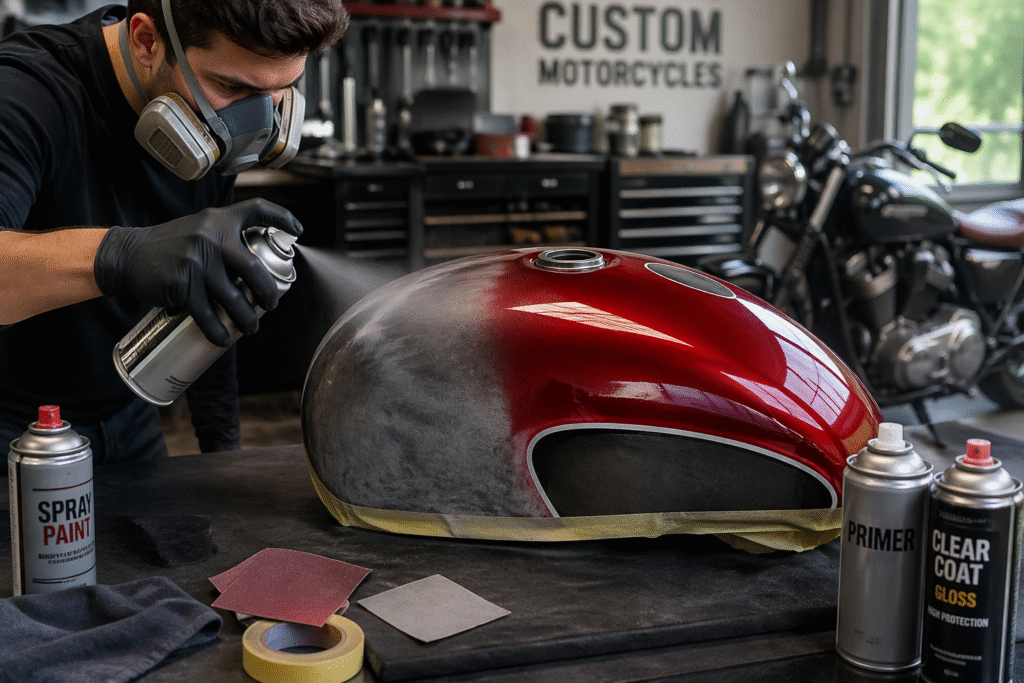
Essential Tools and Materials to Gather Before You Begin
Before jumping into the process, gather all the necessary tools and materials.
Essential Materials:
- High-quality automotive spray paint
- Primer (compatible with your paint type)
- Clear coat (for protection and shine)
- Sandpaper (80, 180, 400, 800, and 1500 grit)
- Masking tape
- Plastic sheets or newspaper
- Degreaser or rubbing alcohol
- Clean microfiber cloths
Safety Gear:
- Respirator mask (highly recommended)
- Gloves
- Safety goggles
Having everything ready ensures a smooth workflow and prevents mistakes caused by rushing.
Understanding the Basics of Spray Painting
Before you begin painting, it’s important to understand how spray painting works.
Spray paint is applied in thin layers, not thick coats. Each layer builds gradually, creating a smooth and even finish. Applying too much paint at once can cause drips, bubbles, and uneven texture.
Key Principles:
- Always spray in light, even coats
- Maintain a consistent distance (6–10 inches)
- Keep your hand moving—never stop in one spot
- Allow proper drying time between coats
Environmental conditions also matter. Ideal painting conditions include:
- Temperature: 20–30°C (68–86°F)
- Low humidity
- Dust-free environment
Step-by-Step Guide to Painting Motorcycle Gas Tank with spray can
Now let’s dive into the complete process of painting motorcycle gas tank with spray can.
1. Remove the Gas Tank
Start by safely removing the gas tank from your motorcycle.
- Turn off the fuel valve
- Drain any remaining fuel
- Disconnect fuel lines carefully
- Remove mounting bolts
⚠️ Safety Tip: Always work in a well-ventilated area away from open flames.
2. Clean and Degrease the Surface
A clean surface is essential for proper paint adhesion.
- Use a degreaser or alcohol
- Remove oil, dirt, and old residue
- Wipe with a lint-free cloth
Even small contaminants can ruin your paint job, so don’t skip this step.
3. Sand the Tank Properly
Sanding creates a smooth surface and helps the paint stick better.
Sanding Process:
- Start with 80–180 grit (remove old paint or rust)
- Move to 400 grit (smooth surface)
- Finish with 800 grit (fine finish)
If your tank has dents or scratches, consider using filler before sanding.
4. Apply Primer
Primer acts as a base layer and improves paint durability.
- Shake the can well
- Apply 2–3 light coats
- Wait 10–15 minutes between coats
After drying, lightly sand with 800 grit sandpaper for a smooth base.
5. Start Spray Painting
This is where your motorcycle begins to transform.
Proper Technique:
- Hold the can 6–10 inches away
- Use steady, side-to-side motion
- Overlap each pass slightly
Application:
- Apply the first coat lightly (mist coat)
- Wait 10–15 minutes
- Add 2–4 additional thin coats
🎯 Pro Tip: Patience is key. Applying several light coats delivers far better results than laying down a single heavy layer.
6. Let It Dry Between Coats
Drying time is critical for a perfect finish.
- Follow instructions on the paint can
- Avoid touching the surface
- Keep the area dust-free
Rushing this step can lead to fingerprints, smudges, or uneven texture.
7. Apply Clear Coat for Protection
Clear coat adds shine and protects your paint from damage.
- Apply 2–3 thin coats
- Maintain the same spraying technique
- Allow proper drying between layers
This step gives your tank that professional glossy finish.
8. Final Drying and Curing
After applying the clear coat:
- Let the tank dry for 24–48 hours
- Full curing may take up to a week
- Avoid exposure to dust or moisture
Once fully cured, reinstall the tank on your motorcycle.
Best Spray Paint Types for Motorcycle Tanks
Choosing the right paint is crucial for durability and appearance.
Common Types:
1. Acrylic Paint
- Easy to use
- Quick drying
- Good for beginners
2. Enamel Paint
- Durable and glossy
- Resistant to weather
3. Urethane Paint
- Professional-grade finish
- Highly durable (but more expensive)
Finish Options:
- Glossy (shiny and reflective)
- Matte (modern and subtle)
- Metallic (premium look)
Common Mistakes to Avoid
Even small mistakes can ruin your entire paint job. Here’s what to watch out for:
- ❌ Spraying too close → Causes drips
- ❌ Skipping sanding → Poor adhesion
- ❌ Ignoring primer → Uneven finish
- ❌ Painting in dusty areas → Contamination
- ❌ Applying thick coats → Runs and bubbles
- ❌ Rushing drying time → Smudges
Avoiding these mistakes will significantly improve your results.
Pro Tips for a Professional Finish
Want your DIY paint job to look like it was done by a professional? Follow these expert tips:
- Use a spray handle for better control
- Practice on a scrap surface first
- Wet sand between layers (optional for ultra-smooth finish)
- Keep consistent hand movement
- Work in a well-lit environment
These small details make a big difference in the final outcome.
Cost Breakdown: DIY vs Professional Painting
One of the biggest advantages of spray painting is cost savings.
DIY Cost:
- Spray paint: $10–$20 per can
- Primer: $10–$15
- Clear coat: $10–$20
- Sandpaper & supplies: $15–$30
👉 Total DIY Cost: $50–$100
Professional Paint Job:
- Typically ranges from $300 to $1000+
Verdict:
DIY is significantly cheaper and perfect for beginners willing to invest time and effort.
Maintenance Tips After Painting
After completing your paint job, proper maintenance will keep it looking fresh.
Do:
- Clean with a soft cloth
- Use mild soap for washing
- Apply wax after full curing
Avoid:
- Harsh chemicals
- Scratching the surface
- Pressure washing too closely
With proper care, your paint job can last for years.
FAQs
Q1: Can You Spray Paint a Motorcycle Gas Tank Without Taking It Off?
Yes, you can paint a motorcycle gas tank without removing it, but it isn’t the best approach. Removing the tank gives you complete access to every surface, reduces the risk of overspray on your motorcycle, and helps create a smoother, more professional-looking finish. If you decide to leave the tank installed, carefully mask the surrounding parts with plastic sheeting and painter’s tape.
Q2: How long does spray paint last on a motorcycle gas tank?
A properly painted motorcycle gas tank can last 3 to 7 years or longer, depending on the quality of the paint, surface preparation, and ongoing maintenance. Using automotive-grade primer, spray paint, and a durable clear coat significantly improves resistance to scratches, UV rays, fuel spills, and weather exposure.
Q3: Should You Apply a Clear Coat After Spray Painting a Motorcycle Gas Tank?
Yes. A clear coat is highly recommended because it seals the color coat, adds gloss, and protects the finish from fading, minor scratches, moisture, and gasoline splashes. Applying two or three thin coats of automotive clear coat will help your paint job last much longer.
Q4: Which Spray Paint Works Best for a Motorcycle Gas Tank?
Automotive-grade enamel, acrylic enamel, and 2K urethane spray paints are among the best choices for motorcycle gas tanks. They provide strong adhesion, excellent durability, and a professional-looking finish. Always pair the paint with a compatible primer and clear coat for the best long-term results.
Q5: How many spray paint cans do I need for one motorcycle gas tank?
Most standard motorcycle fuel tanks require 1 to 2 cans of primer, 2 to 3 cans of color paint, and 1 to 2 cans of clear coat, depending on the tank size and the number of coats applied. Buying an extra can is a good idea in case you need touch-ups or additional coverage.
Q6: Can I spray paint over the existing paint?
Yes, as long as the existing paint is in good condition. Clean the surface thoroughly, sand it with fine-grit sandpaper to improve adhesion, and apply a suitable primer before spraying the new color. If the old paint is peeling, cracked, or heavily damaged, remove it before repainting.
Q7: How do I fix paint runs, drips, or orange peel?
Allow the paint to dry completely before attempting any repairs. Wet sand the affected area with fine-grit sandpaper (typically 1,000 to 1,500 grit), clean away the sanding residue, and apply new light coats of paint followed by clear coat if needed. Avoid spraying heavy coats, as they are the most common cause of runs and uneven texture.
Conclusion
Painting motorcycle gas tank with spray can is an affordable and practical way to refresh your bike’s appearance without investing in professional painting equipment. By taking the time to prepare the surface properly, applying a quality primer, using automotive-grade spray paint, and sealing the finish with a durable clear coat, you can achieve a smooth, long-lasting result that enhances both the look and protection of your motorcycle.
Although the process requires patience, careful sanding, and multiple light coats, the effort pays off with a finish that can withstand everyday riding when maintained correctly. Following the right techniques also helps prevent common problems such as paint runs, peeling, uneven coverage, and premature fading.
Whether you’re restoring an older motorcycle, repairing a damaged fuel tank, or creating a custom paint design, this step-by-step guide provides everything you need to complete the project with confidence. Gather your supplies, work in a clean and well-ventilated area, and take your time with each stage. With the right approach, your DIY motorcycle gas tank paint job can deliver professional-looking results while saving you hundreds of dollars compared to a professional repaint.